
Why a Full Tiling System Matters in Renovations
Summary: A great-looking bathroom or kitchen means nothing if the system underneath fails. A proper tiling system protects your home from water damage, structural issues, and costly repairs. The difference between a renovation that lasts and one that fails often comes down to what you cannot see.
The Hidden System Behind Every Tiled Surface
A tiled area isn't a single layer. It's a system made up of multiple components, each doing a specific job.
When those components are chosen and installed correctly, they work together. When they're mixed, rushed, or skipped, problems show up sooner than most people expect.
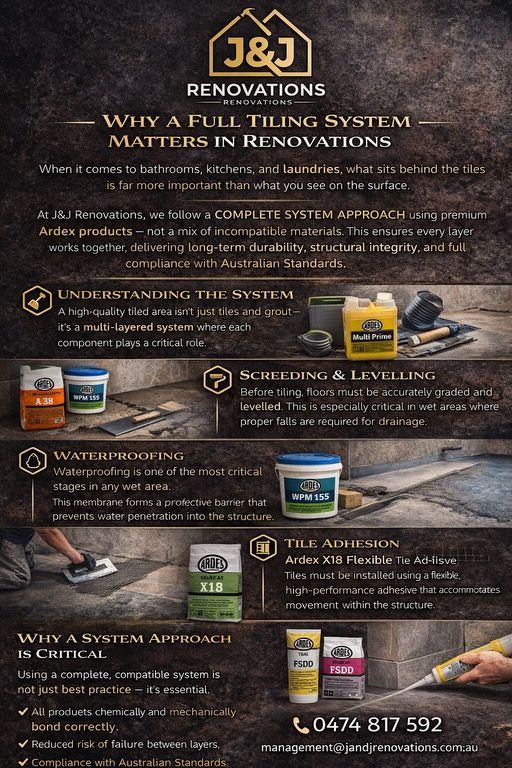
Here's how that system actually works, and why we use premium Ardex products across every layer to ensure compatibility and long-term performance.
Surface Preparation: The Step Most People Never See
Before anything goes down, the surface needs to be prepared properly. We use Ardex Multi Prime to stabilise substrates, control porosity, and ensure adhesives bond correctly. Without proper priming, tiles can lift, adhesives can fail, and curing becomes uneven.
This is where shortcuts often happen because it's not visible. But skipping proper priming is one of the fastest ways to create long-term issues.
Screeding and Levelling: Getting the Foundations Right
A level surface isn't just about aesthetics. It directly affects drainage and performance.
In wet areas, floors must be graded so water flows to the drain. If that fall is off, water pools. Over time, that leads to staining, mould, and deterioration. We use engineered screed and levelling compounds to create the precise falls required for proper drainage.
Poor levelling also causes tile lippage, where edges sit unevenly. It might seem minor at first, but it quickly becomes noticeable and frustrating in daily use.
Waterproofing: Where Most Renovations Fail
If there's one stage that deserves attention, it's waterproofing.
We apply Ardex WPM155 Waterproofing Membrane to create a protective barrier that stops water from entering the structure. Without it, moisture can travel into walls and floors, leading to mould, rot, and expensive structural repairs.
According to the Australian Building Codes Board, waterproofing failures are one of the most common causes of building defects in wet areas. It's not dramatic. It's just reality. When waterproofing fails, the damage is often hidden until it becomes serious.
Tile Adhesion: More Than Just Sticking Tiles Down
Tiles need to move slightly with the building. Canberra homes expand and contract with temperature changes, and rigid systems can't handle that.
We use Ardex X18 Flexible Tile Adhesive to keep tiles bonded while allowing for that movement. This flexible, high-performance adhesive maintains strong bond strength, prevents tile lifting or drumming, and reduces cracking under stress. Without it, tiles can sound hollow, lift, or crack under pressure.
This is where product compatibility matters. Not all adhesives behave the same, and mixing systems can lead to failures between layers.
Grouting: Protection in the Small Details
Grout does more than fill gaps. We use Ardex FG8 and FSDD grouts because they protect tile edges, reduce moisture penetration, and contribute to the overall durability of the surface.
These grouts provide a consistent finish, resistance to staining and wear, and long-term performance in high-use areas like kitchens and bathrooms. Poor-quality grout can stain, crack, or wear down quickly, especially in spaces that see daily use.
Movement and Sealing: Allowing the Structure to Breathe
Buildings move. That's normal.
Junctions and transitions need flexible sealing to accommodate that movement. We use
Ardex SE Silicone in these areas to create watertight seals, allow for movement accommodation, and provide mould resistance in wet environments. Without it, rigid finishes crack over time, and those cracks become entry points for water.
Why a System Approach Actually Matters
This is where many renovations go wrong.
Different products are mixed together without considering how they interact. It might save a bit upfront, but it introduces risk across the entire system.
When a full system is used, every layer is designed to work with the others. That means stronger chemical and mechanical bonding, lower risk of failure between layers, compliance with Australian Standards such as AS 3740 and AS 3958, and better long-term performance in wet and high-traffic areas.
It's not about being overly technical. It's about reducing the chance of problems that are expensive and disruptive to fix later.
The Cost of Getting It Wrong
Most tiling failures don't show up immediately. They appear months or years later. Tiles start lifting. Grout cracks. Moisture builds up behind walls. By the time it's visible, the repair often involves removing the entire area and starting again.
That's why the cheapest option upfront can become the most expensive decision over time.
Planning a Renovation in Canberra?
At J&J Renovations, the focus is on building systems that last. That means using compatible, high-quality Ardex products across every stage. It means following proper installation methods. And it means not cutting corners in areas you'll never see.
Because the goal is simple: your renovation should perform just as well years from now as it does on the day it's finished.
If you're renovating a bathroom, kitchen, or laundry, it's worth asking one simple question: what system is being used behind the tiles?
Understanding that answer can save you from future headaches, unexpected costs, and major repairs. If you want your renovation built properly from the ground up, J&J Renovations is ready to help.
Frequently Asked Questions
How long should a properly installed tiled area last?
With the right system, it can last decades without major issues. The key is using compatible products across every layer and following proper installation methods.
Is waterproofing really that important in small bathrooms?
Yes. Even small areas are exposed to constant moisture, which can cause hidden damage over time. Proper waterproofing protects your home's structure and prevents costly repairs.
Can I mix different tiling products to save money?
You can, but it increases the risk of failure because products may not be compatible. Mixing systems can lead to debonding, cracking, and premature failure between layers.
Why do tiles sometimes sound hollow after installation?
This often comes down to poor adhesion or incorrect installation methods. Using the right adhesive and proper application techniques prevents this issue.
What causes grout to crack or discolour?
Low-quality materials, movement, or moisture exposure are common causes. Using high-performance grouts designed for wet areas significantly reduces these problems.
Do all renovations need flexible adhesives?
In most cases, yes, especially in areas exposed to temperature changes or movement. Canberra's temperature swings make flexible adhesives essential for long-term performance.
Is fixing tiling issues expensive?
Repairs can be costly because they often require removing tiles and redoing the system underneath. Investing in quality installation upfront is almost always more cost-effective than fixing failures later.